Stone Patio-Safe Maintenance: Prevent Chips, Stains, and Joint Failure
Stone Patios That Stay Pristine Season After Season
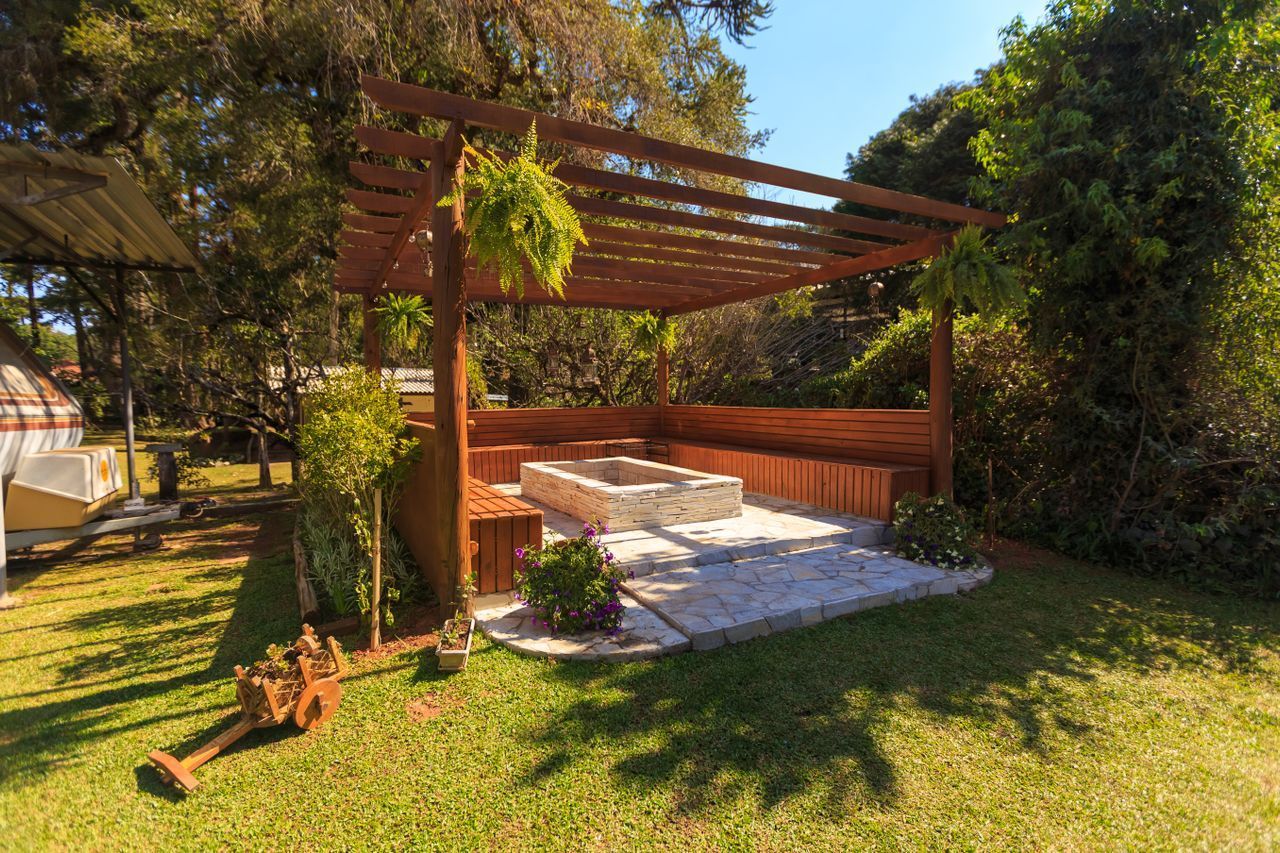
A stone patio should feel like an outdoor room, not just a place to put furniture. The lines of the stone, the way it frames your pool or garden, and the way it connects to your home all create a quiet sense of architecture under your feet. When that surface starts to chip, stain, or shift, the whole space can feel off, even if the damage looks small.
What surprises many homeowners is that the damage often comes from normal landscape maintenance. Mowing, edging, leaf blowing, fertilizing, and de-icing can slowly chip corners, wash out joints, and leave shadow stains that never quite go away. With the right habits, those everyday tasks can protect your patio instead of wearing it down.
At J. Rodman Home Improvement and Landscape, we treat stone patios as curated assets inside larger masterpiece gardens. Ranked Top 3 in Hartford County, we design and care for properties as complete outdoor living environments, not as separate projects. This Stone Patio, Safe Maintenance Playbook shares the step-by-step habits we use so your patio keeps its structural elegance season after season.
Reading Your Patio Like an Architect’s Blueprint
Before changing any maintenance habits, it helps to read your patio like a landscape architect would. Different materials and details call for different care.
Look first at the stone itself:
- Natural stone, like bluestone or granite, often has slight color changes and a more organic surface
- Concrete pavers tend to be uniform in size and color with a repeating pattern
Then look at the joints:
- Polymeric sand joints feel sandy but firm and shed only a little grit when dry
- Mortared joints are rigid and smooth, with no movement between stones
- Open or gravel-filled joints let water pass through more freely
Drainage patterns also matter. Notice where water flows after a storm. Do puddles form near the house, or does water slide toward a lawn, bed, or drain? That path will tell you where joint materials might wash out or where stains may build up.
There are subtle warning signs that the patio is under stress:
- Gritty sand along the edges after storms
- A hollow sound when you tap or walk on certain pavers
- A faint wobble underfoot on a single stone
- Thin chips along step treads or coping
- Rusty or dark “shadows” where fertilizer or furniture sat
An estate curation mindset sees your patio as one part of a whole system with planting beds, grading, irrigation, and lighting all feeding into it. Our own 4-step process, Consultation, Meeting, Proposal, and Execution, is built around that idea. We study the patio in context, then align maintenance practices so every part supports the rest.
Mowing, Edging, and Blowing Without Chipping Stone
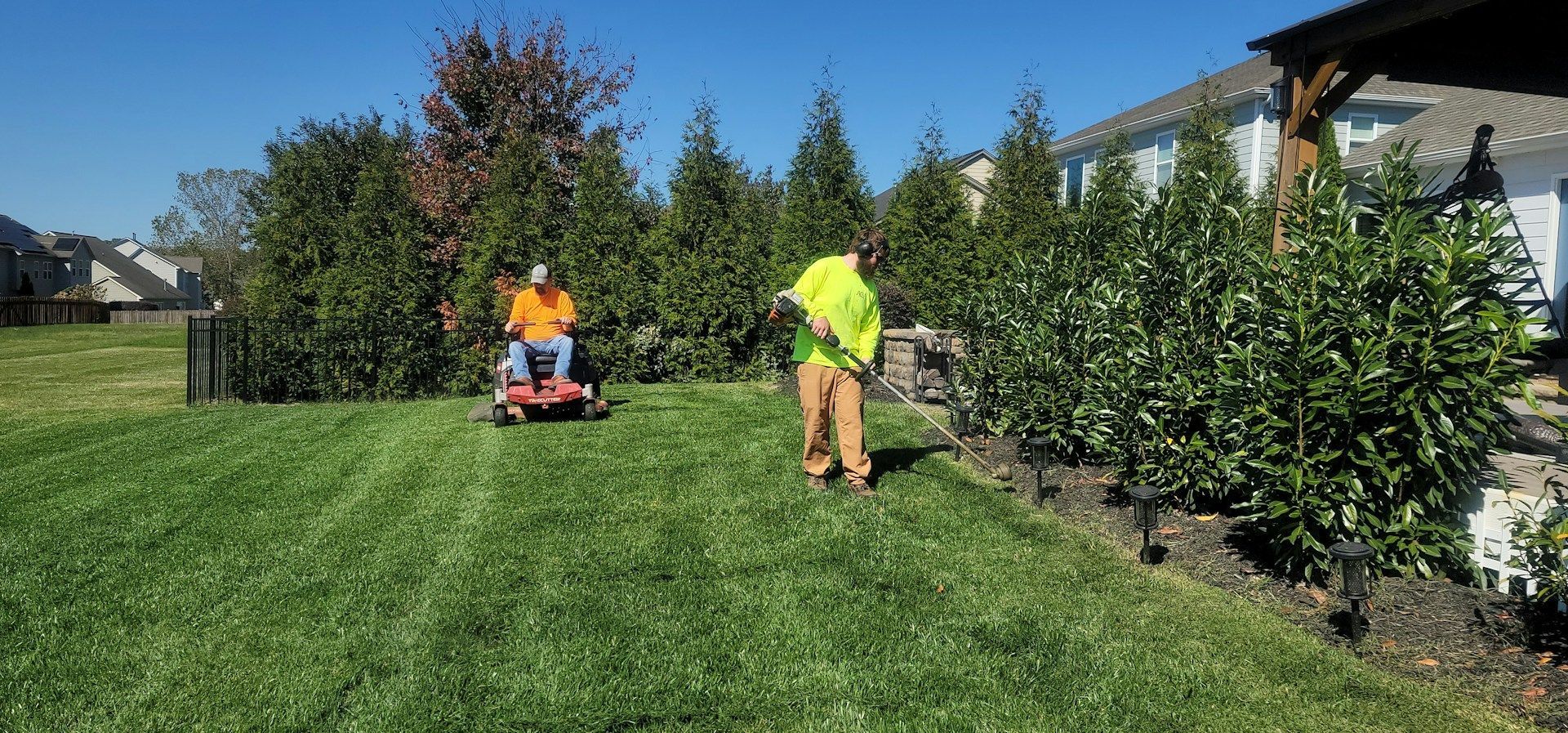
Mowing near stone is where many patios start to lose their crisp edge. The goal is to keep the turf lush and clean without turning the mower into a battering ram.
Smart mowing habits around hardscapes include:
- Keep mower blades at about 3 to 3.5 inches to avoid scalping the turf at the patio edge
- Avoid tight turns with the wheels or deck riding on the stone
- Use a trimmer line at a gentle angle to finish where the mower cannot safely go
Metal mower decks, hidden stones in the lawn, and very low cutting heights can all chip paver edges or natural stone coping. Damage often starts as small nicks that catch dirt and moisture, then grow with freeze-thaw cycles.
For edging, the goal is a clean, gallery-like border that looks intentional and protects structure. Power edgers can be used, but blades should not ride against stone. A blade tapping the edge, or cutting too deep, can undercut bedding materials and lead to settled, loose pavers over time.
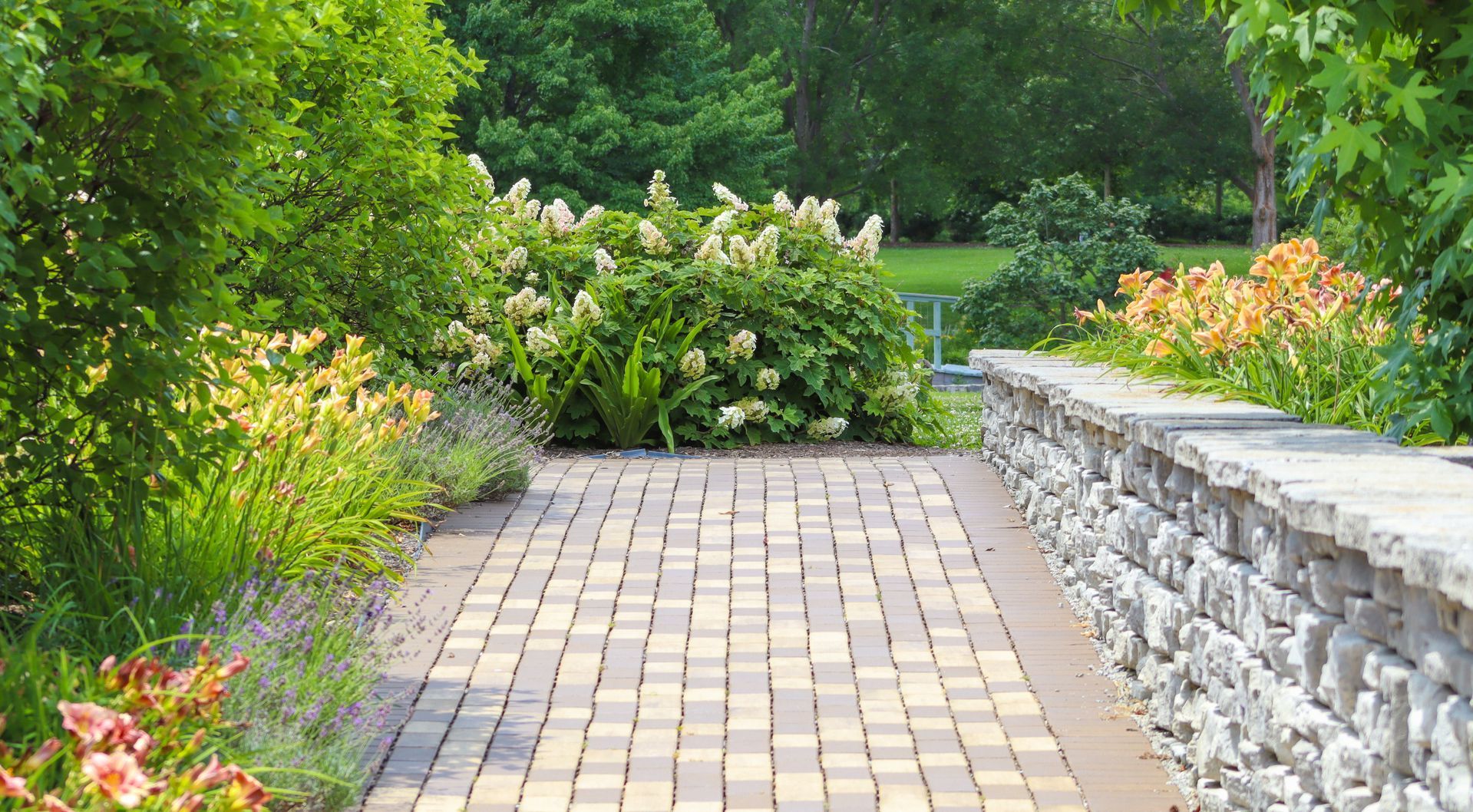
A narrow mulch or planting strip between turf and patio can be a smart buffer. This soft transition:
- Reduces the need to run mowers and edgers right against stone
- Frames the patio visually with color and texture
- Gives a place for water to soak in instead of washing across joints
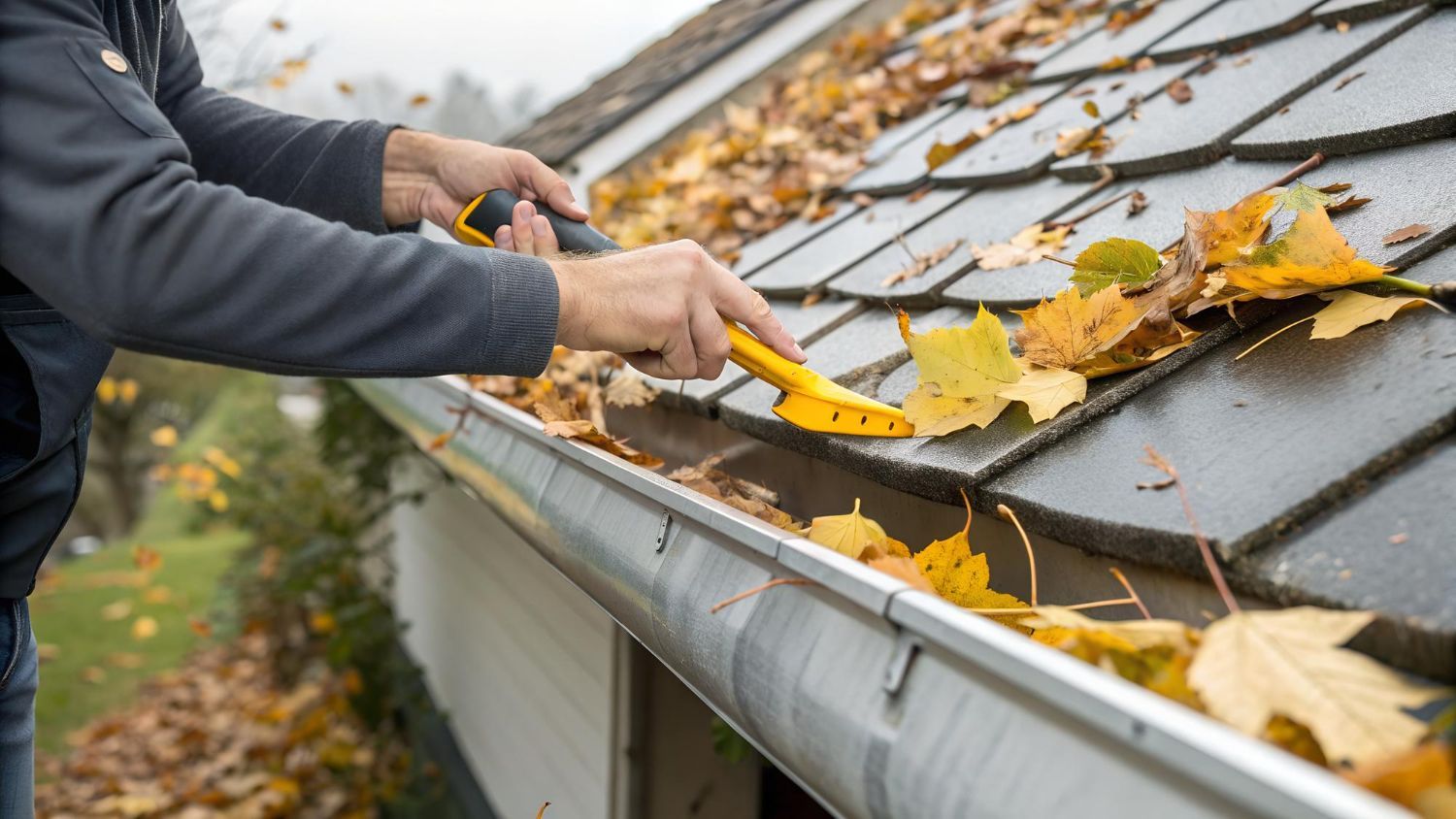
Leaf blowers help keep stone surfaces clear, but they can also blast out joint sand if aimed the wrong way. Use moderate power and aim air across the surface, not straight down into joints. For fall cleanup, keeping leaves and acorns off the patio is about more than looks. Left in place, they break down into tannin-rich stains, mold, and a slick film once temperatures start to drop.
Fertilizers, Irrigation, and De-Icers That Protect Your Investment
Fertilizers and weed controls can leave marks that feel like they came out of nowhere. Nitrogen-rich products and iron supplements are common sources of shadow stains on stone. On warm, humid days, granules that land on the patio can dissolve and leave dull spots or rusty halos.
To keep your stone safe when using lawn products:
- Spread granular fertilizer on calm days so it stays on the turf
- Switch to a drop spreader near patios and walkways for more control
- Blow stray granules back into the lawn right away
- If you see product on the stone, rinse lightly before it dries
Water is just as influential. Irrigation heads that overspray onto patios day after day can feed algae along edges, wash out joints, and support efflorescence, the chalky white film that sometimes appears on masonry. Periodic irrigation checks help. Adjust nozzles so the spray pattern kisses the grass or planting bed, not the stone.
Thoughtful water-wise garden design can turn a problem into a strength. Directing runoff into beds with deep-rooted plantings keeps water where it benefits soil and roots, while easing pressure on patio joints.
Winter care is where many patios suffer their hardest hits. Traditional rock salt, or sodium chloride, can lead to flaking, scaling, and accelerated joint breakdown as freeze-thaw cycles work on weakened areas.
Safer de-icing strategies for Hartford County winters include:
- Using stone-friendly products, such as calcium magnesium acetate where appropriate
- Applying sand for traction on key paths and steps
- Shoveling or using a snow blower with skids set so metal parts do not scrape stone
- Cleaning up leftover de-icer and sand promptly in early spring
Trailblazer Estate Care Trends for Stone Patios
Our Trailblazer approach looks ahead at how high-end properties in our region can care for stone surfaces with less impact and more artistry.
Regenerative and low-impact maintenance focuses on building soil health and stability around your patio. Deep-rooted plant palettes, rich organic mulches, and thoughtful grading can steady surrounding ground and reduce erosion that would otherwise nibble away at base materials.
Forward-looking ideas many homeowners love include:
- Organic or low-salt de-icing blends where conditions allow
- Biodegradable cleaners for light film and organic stains
- Micro-clover, groundcovers, or small meadows at patio edges to reduce mowing pressure
Smart systems are another key part of precision care. Wi-Fi irrigation controllers and moisture sensors tailor watering so edges are not soaked unnecessarily. App-based dimmers for integrated lighting let you set the soft glow of steps and walls without creating heat hotspots or glare on stone.
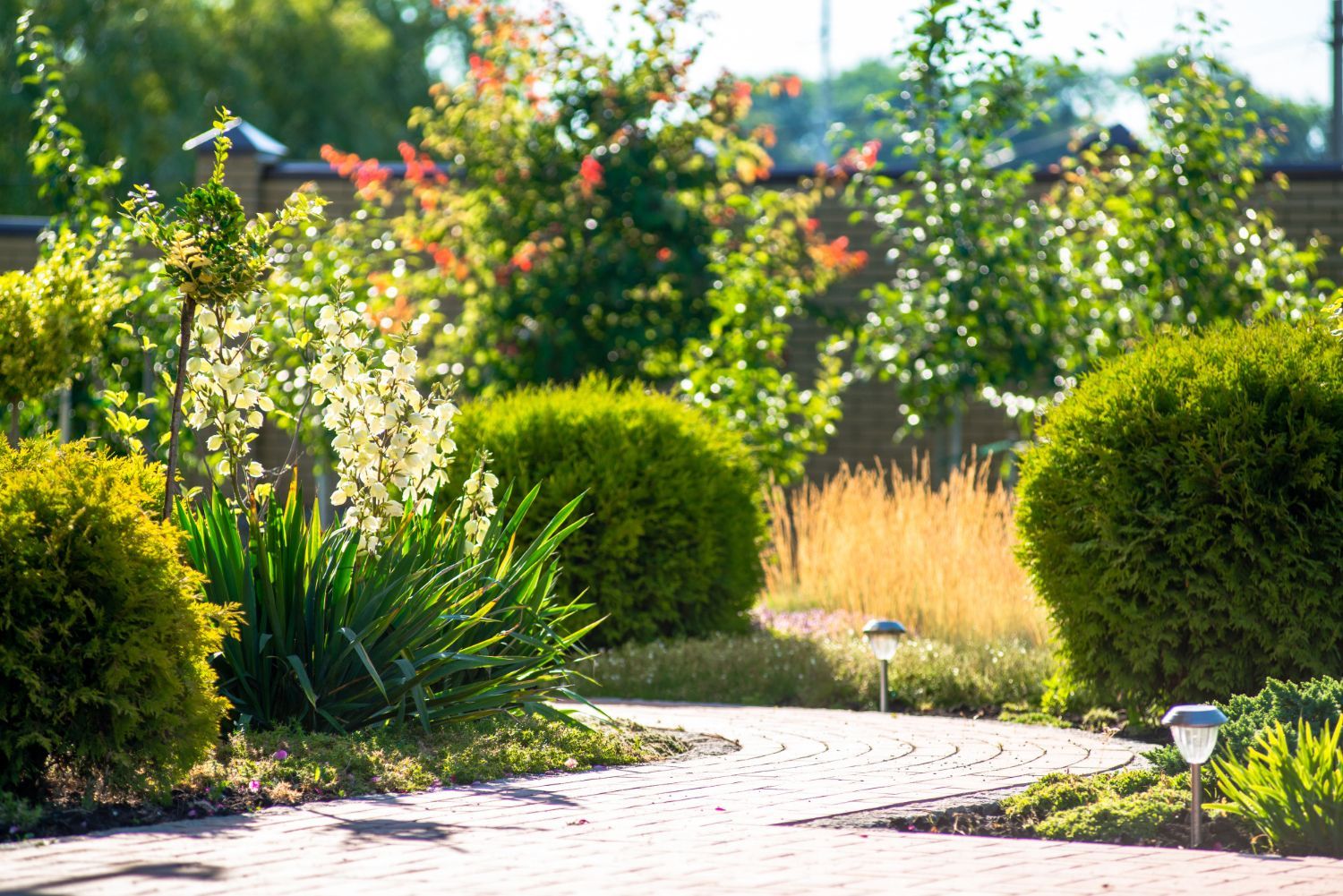
Integrated lighting recessed into steps, seating walls, and coping needs special attention in any maintenance plan. Snow removal, edging, and even simple sweeping should respect fixture locations so wires stay undisturbed and lenses stay clear and unscratched.
Year-round estate maintenance brings all of this together. Instead of random yard work, think in terms of:
- Fall visits to manage leaves and prep for snow
- Late-fall checks of joints, edges, and lighting before freeze cycles
- Spring inspections to refresh sand, adjust irrigation, and clean surfaces
As a firm ranked Top 3 in Hartford County, we pair high-end garden care in the growing season with commercial-grade snow management strategies in the colder months. It all flows from one design story of how your property should feel, no matter the season.
Elevate Your Patio Into a Curated Outdoor Living Legacy
Your role as a homeowner is not just to keep the patio swept. You are the steward of an outdoor room that anchors your home’s architecture, frames your views, and sets the mood for every gathering outside. Each maintenance choice, from how you edge the lawn to what you spread on icy steps, either protects that room or slowly dulls it.
At J. Rodman Home Improvement and Landscape, we see every stone patio inside the larger composition of hardscapes, softscapes, and lighting. Our 4-step process, Consultation, Meeting, Proposal, and Execution, gives us a clear path to create stone-safe maintenance plans that cover everything from summer mowing patterns to late-fall de-icing protocols. Treated with that level of care, your patio stops being just a surface and becomes part of a lasting outdoor living legacy.
Get Started With Your Project Today
If you are ready to keep your yard healthy, beautiful, and easy to enjoy, our expert
landscape maintenance services can take the work off your hands. At J. Rodman Home Improvement And Landscape, we customize every maintenance plan to fit your property, schedule, and goals. Reach out today and let us help you protect your investment and keep your outdoor spaces looking their best season after season. If you have questions or want to schedule a visit, simply
contact us.