Softscape-Safe Do/Don’t Guide: Mowers, Trimmers, Blowers, Foot Traffic
Preserve the Living Architecture of Your Grounds
Careful landscape maintenance can either protect your gardens or slowly wear them down. Every pass of a mower, every sweep of a blower, even where people walk, leaves a mark on the living architecture of your property. On a clear fall day, with copper and gold leaves glowing against stone walls and trimmed hedges, the difference between care and carelessness is easy to see.
At J. Rodman Home Improvement and Landscape, we curate estates in Hartford County with that level of attention. Ranked top 3 in Hartford County, we treat softscapes as extensions of the home, not background scenery. This guide walks through softscape-safe do-and-don’t practices for mowers, trimmers, blowers, and foot traffic so your beds, trees, and root zones stay strong while the property stays orderly.
This article is part of our Trailblazer series, where day-to-day maintenance connects with regenerative landscaping, water-wise garden designs, and a smooth seasonal shift into commercial snow management. Small choices in fall maintenance can support healthier soil, better water use, and safer winter operations.
Respecting Root Zones as the Foundation
Strong trees and large shrubs anchor an estate. Below the surface, the root zone is the quiet engine that keeps that structure alive. In simple terms, the root zone is the area of soil where the roots spread to breathe, drink, and anchor. The critical root zone, or CRZ, is the invisible halo under and just beyond the canopy where damage hits the tree the hardest.
To protect that halo, we recommend a few simple habits.
Do:
- Keep mowers and heavy equipment at least 2 to 3 feet away from trunks of young trees
- For mature trees, stay several feet beyond the drip line when possible
- Maintain a mulch ring 2 to 3 inches deep, wider than the canopy where space allows
- Use stepping stones or gravel paths where you need to walk or work often
That mulch ring is a quiet workhorse. It cushions roots from compaction, protects the trunk from mower blades, keeps moisture in the soil during hot spells, and helps soften temperature swings in shoulder seasons.
Do not:
- Do not park vehicles, trailers, or store equipment near tree bases or along bed edges
- Do not pivot zero-turn mowers in the same spot next to trunks, patios, or bed lines
- Do not allow string trimmers to scrape or “ring” trunks or the bases of shrubs
- Do not try to fix compacted, thin turf by just adding more water
Repeated weight on the same spot squeezes air pockets out of the soil. Roots need that air. When soil stays compressed, trees often respond with thinner canopies and higher stress over time. Instead of extra irrigation, a regenerative approach looks at soil structure: aeration, compost, and deep mulch to help roots recover.
Softscape-Safe Mower and Trimmer Practices
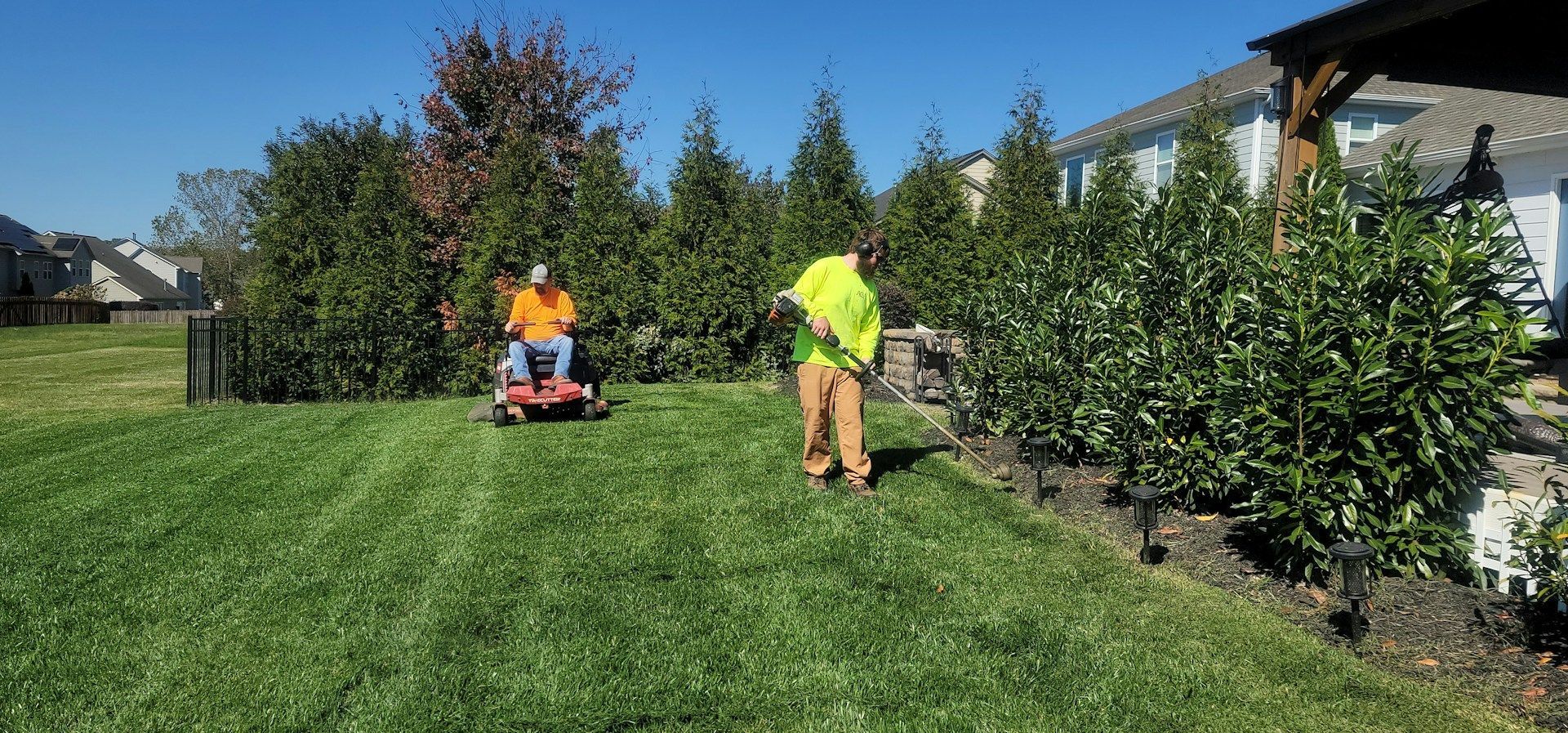
Mowers and trimmers can either frame your masterpiece gardens like clean picture rails or slowly slice into their edges. The goal is to treat lawn and bed areas as separate planes that are in conversation with the home’s architecture.
Do:
- Establish clear mowing corridors with smooth, sweeping lines around beds
- Keep mower decks at about 3 to 4 inches for cool-season turf so grass can root deeper
- Use edging tools or low-speed trimming a few inches away from perennials and groundcovers
- Approach ornamental grasses and water-wise plantings with slow, careful passes
Proper mower height protects the lawn and the beds. Taller grass shades its own roots, needs less water, and competes better with weeds. This creates a calmer border where turf and planting beds can meet without bare, stressed strips.
Do not:
- Do not scalp grass near bed lines to “sharpen the look”
- Do not run trimmers at full throttle against tree bark, irrigation tubing, or metal edging
- Do not rush passes around focal beds, terraces, or specimen plantings
Scalped edges invite weeds, erosion, and mud splatter on stonework and plant leaves. Trimmer damage can be quiet but serious. A single narrow ring of missing bark can interrupt the flow of water and nutrients up the trunk, turning a signature tree into a long-term worry.
In our work, we build these standards into every maintenance plan using our 4-step professional process. Consultation, Meeting, Proposal, and Execution are all focused on the same goal: having every mower pass and trimming detail support the original design intent.
Blowers, Leaves, and Gentle Cleanup
When leaves start to float down over stone terraces and gravel paths, the sound of a blower is never far behind. Used with care, blowers can clean hardscapes and lawns while still respecting soft beds, water-wise gardens, and regenerative planting zones.
Do:
- Use blowers at reduced throttle near mulch, gravel joints, and delicate perennials
- Aim air above, not into, beds so leaves slide off without exposing roots or soil
- Feather the edges in regenerative zones, leaving a light blanket of leaf litter where appropriate
- Work with the geometry of paths, walls, and patios to move debris in clean, intentional lines
That feathering technique is especially helpful in gardens designed to save water and support soil life. A thin layer of broken leaves can act as natural mulch and shelter for beneficial insects and microbes that help keep plants healthy.
Do not:
- Do not blast air directly into shrubs, ornamental grasses, or low evergreen masses
- Do not try to remove every last leaf from beds before winter
- Do not ignore noise, timing, and where debris ends up on neighboring properties
Aggressive blowing can break stems, flatten ornamental grasses, and throw mulch into lawns and driveways. Stripping every leaf from beds also exposes soil to winter wind and rain, which can lead to crusting, runoff, and shallow root systems. Prestige estate curation also respects the neighborhood experience, from sound levels to keeping shared boundaries clean.
Foot Traffic, Service Routes, and Bed Edge Protection
Even quiet steps can slowly reshape a property. A few innocent shortcuts in summer can become bare, compacted scars by spring. Over time, these paths push into bed lines and root zones, distorting the geometry of the design.
Do:
- Plan and respect dedicated service routes for mowers, carts, and technicians
- Use flagstone pads, gravel spurs, or reinforced turf to carry regular traffic
- Place discreet stepping stones through more natural plantings where access is needed
- Guide household members and vendors to use only these planned paths
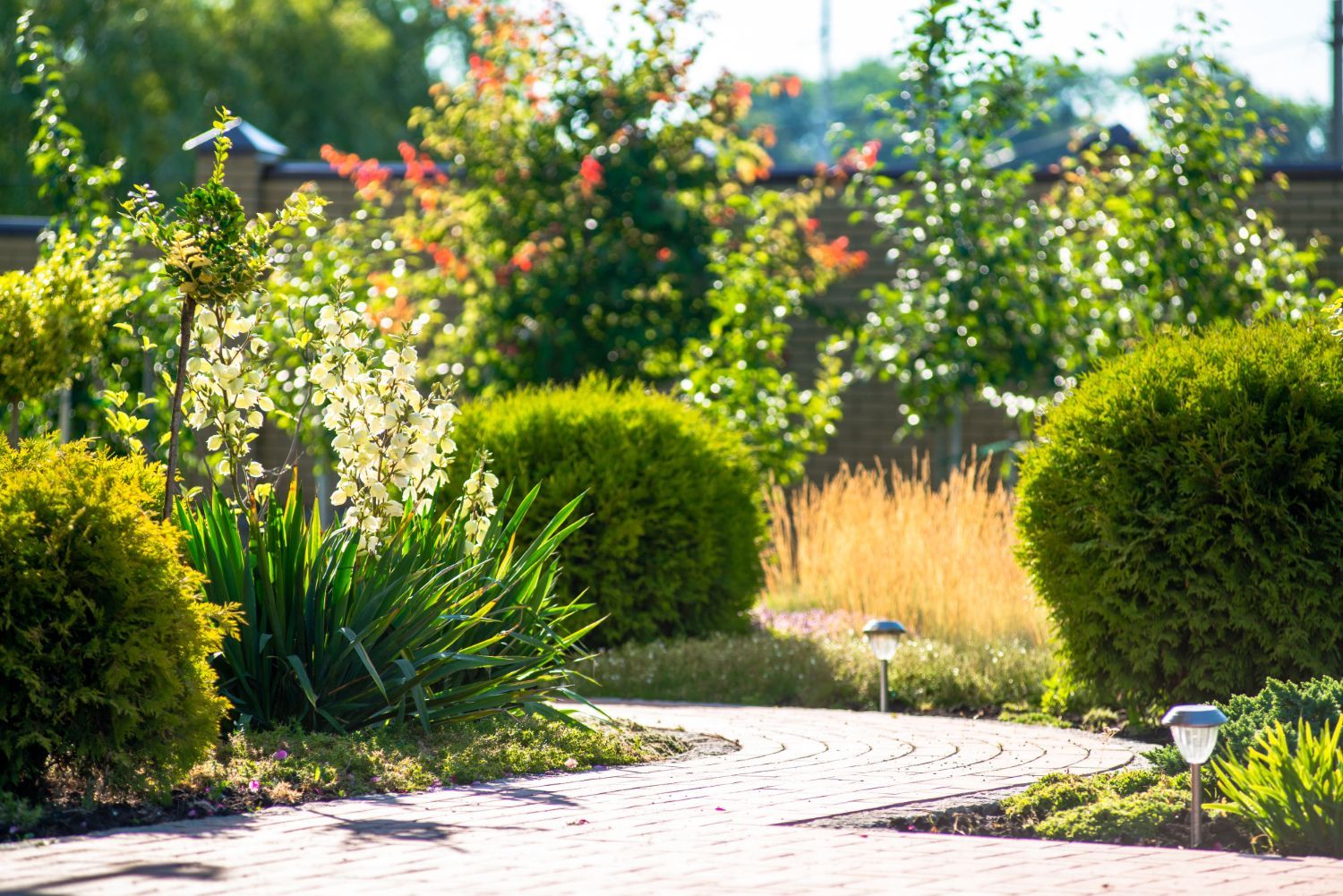
Handled well, these routes become part of the estate’s story. A short gravel spur to a side gate, or a subtle flagstone trail through an herb garden, can feel intentional and graceful while still protecting the “soft shoulders” where lawn meets planting.
Do not:
- Do not allow repeated shortcuts across bed corners or between patios and drives
- Do not store bagged materials, salt, or seasonal tools on bare soil inside root zones
- Do not ignore early hints of compaction like thinning groundcovers, ponding water, or cracked soil
Staging heavy items on soil compresses it and can also leak salts or other materials into the root zone. When we see early warning signs, we read them as design feedback. That is our cue to adjust flow, add structure, and correct soil health before plants decline.
From Fall Gardens to First Snow
By late fall, a well-curated property is quietly shifting from full color to winter readiness. Root zones are mulched, bed edges are clean and stable, and hardscape lines are clear. These same softscape-safe habits set the stage for more efficient commercial snow management once the first storm arrives.
Defined bed lines are easier for plow operators to see, even under low light. Intact mulch rings give tree bases a buffer from plow spray. Strong soil structure underfoot holds up better against winter foot traffic and de-icers. As part of our Trailblazer focus, we also see more estates embracing smart-app lighting systems that gently outline driveways, pathways, and bed edges during snow events, helping protect both people and plantings.
At J. Rodman Home Improvement and Landscape, ranked top 3 in Hartford County, we weave these ideas together through our 4-step process. We begin with a Consultation to walk the property, read traffic patterns, and note vulnerable root zones. In the Meeting, we align maintenance priorities, snow management needs, and the long-term vision for your estate. From there, our Proposal ties together softscape protection, hardscape care, and winter operations, then our Execution brings that plan to life. The goal is simple: every mower, trimmer, blower, boot, and snowplow move in harmony with the design, season after season.
Get Started With Your Project Today
If you are ready to keep your yard looking its best in every season, our team at J. Rodman Home Improvement And Landscape is here to help with tailored
landscape maintenance plans. We will work with you to understand your property’s needs, from routine care to long-term improvements. Reach out today and let us create a schedule that keeps your outdoor spaces healthy, clean, and inviting. If you have questions or want to talk through ideas, simply
contact us to get started.