Planning Landscape Lighting That Actually Works with Your Patio
Light up Your Evenings: How Smart Patio Lighting Extends Your
Good patio lighting can turn a cold, dark slab into the favorite “room” of your home, even in the middle of a Hartford County winter. The air might be chilly, the sky might be dark before dinner, but a warm glow around your patio can still make it feel welcoming and comfortable.
When we plan landscape lighting with the patio at the center, everything works better. You get safer steps, easier movement, nicer views from inside the house, and a softer, more relaxing feel outside. When lighting is just an afterthought, you often end up with glare in your eyes, dark corners where you need light, and a yard that looks flat instead of special.
In this post, we will walk through how to plan lighting that actually works with your patio. We will talk about how you use your space, how to layer different types of light, how to pick fixtures, and why working with a professional team makes the whole plan come together.
Start with How You Really Use Your Patio, Not Just How it Looks
A good lighting plan starts with how you live, not just how the patio looks in a photo. Around most patios, we see a few common zones:
• Dining area
• Grill or outdoor kitchen
• Seating area or fire pit
• Paths and steps leading to doors or the yard
• Transition spots between patio and lawn or driveway
Each of these spots needs a different kind of light. In winter, the sun sets early, so even a quick weekday dinner outside, or a few minutes by a fire bowl, calls for safe paths and a little gentle light on faces and food. When we look a few weeks ahead toward early spring, many homeowners start to think about longer evenings outdoors, small get-togethers, and time outside after work. The same lighting can serve all of these moments if it is planned well.
It helps to think about your normal patterns. Where do you carry plates? Where do kids or guests usually walk? Which doors do you use most? You want light that follows those paths, without harsh flashes or deep shadows.
Task-heavy zones, like the grill, need brighter, focused light. Relaxing zones, like lounge chairs or a fire pit, do better with soft, low light that wraps the seating instead of hitting eyes. Clear traffic paths and patterns give us a map for where light needs to be steady, where it can be gentle, and where it can be more decorative.
Layered Lighting 101: Combining Safety, Comfort, and Atmosphere
A patio that feels great at night usually has three types of light working together. When we talk about landscape lighting, we think in layers.
Ambient light is the overall glow. This might come from wall lights by a door, a nearby post light, or string lights overhead. It sets the base level so the space feels open instead of blacked out.
Task light is focused where you need to see clearly. On a patio, that could mean a grill, an outdoor counter, steps, gates, or doorways. This type of light keeps injuries and spills to a minimum.
Accent light is the fun part. Spotlights and small uplights can highlight trees, stone walls, columns, or water features around your patio. This adds depth and interest so your yard looks good even when you are viewing it from inside on a cold night.
The key is balance. If you only use bright accent lights, you get the “stage spotlight” effect: one tree glows while everything else disappears. If you only have ambient light, the space can look flat. We like to blend:
• Softer light at or below eye level to cut glare
• Focused light on stair treads and edges for safety
• Warm white color temperatures that look good with natural stone, pavers, and plants
Warm white LEDs feel cozy, not harsh, which is especially nice on long winter evenings.
Choosing the Right Fixtures and Layout for a Patio That Works
The right fixtures help your patio feel natural at night, not like a parking lot. Around patios, some of our favorite fixture types include:
• Step lights set into risers to mark each tread
• Recessed lights in pavers or deck boards to outline edges
• Wall-mounted sconces near doors or seating nooks
• Under-cap lights hidden in seat walls or retaining walls
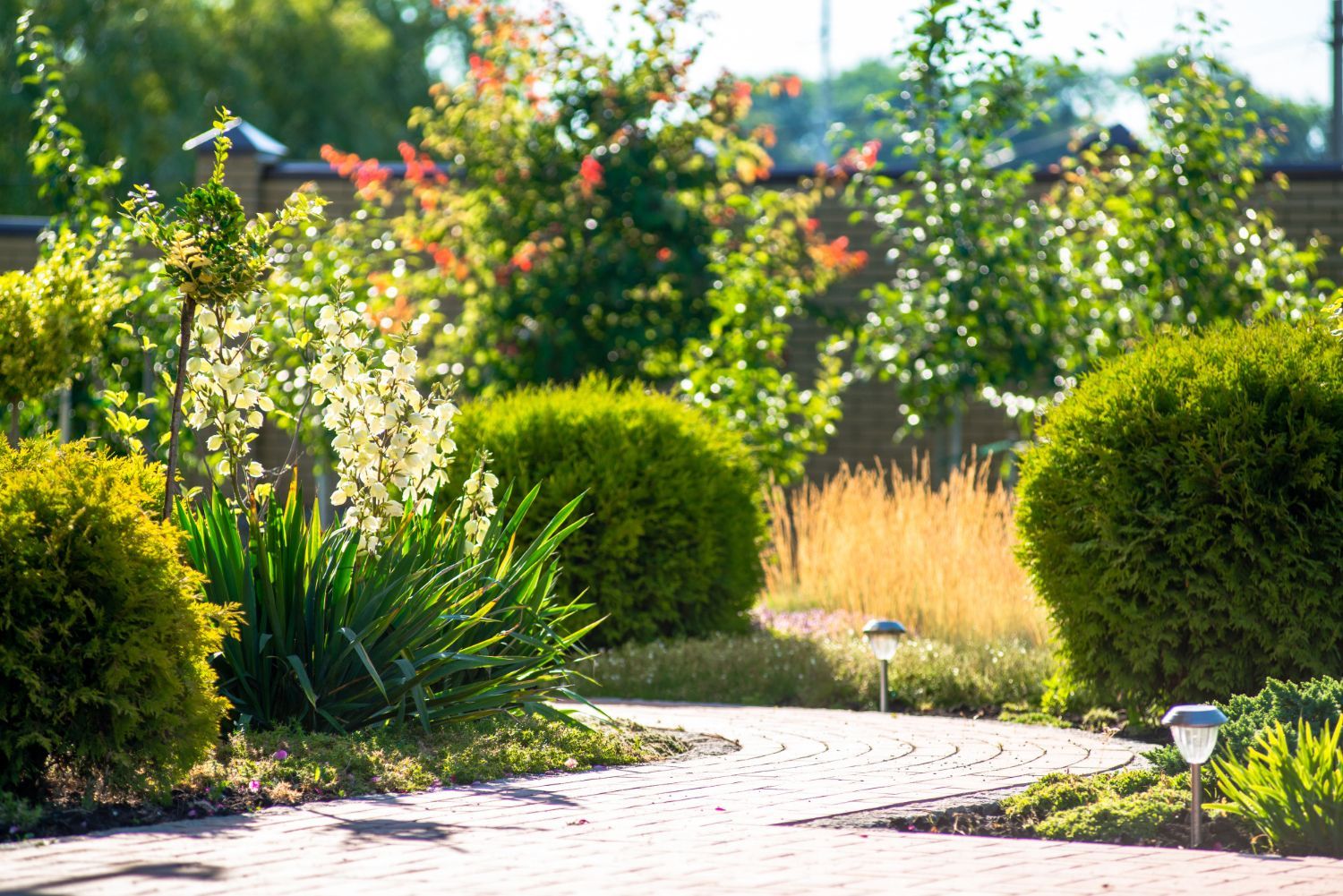
• Low-voltage path lights along walkways and transitions
We also look at style and finish so they match your patio and your home. A sleek metal path light might fit a modern concrete patio, while a more classic shape could work better by traditional stone or brick. When fixtures tie in with your hardscape and your siding, the whole space feels intentional, even in daylight.
Layout matters just as much as style. A few simple rules help:
• Do not point fixtures straight into seats or toward neighbors
• Avoid one super-bright light trying to cover a huge area
• Use more small fixtures at lower brightness instead of a few top-intensity lights
• Light from the side or from below knee height where possible, to keep eyes comfortable
Thoughtful layout makes your patio work in real life, not just on a drawing.
Modern Controls, Energy Savings, and Seasonal Adjustments
Controls are where your lighting plan becomes flexible. Smart timers and dimmers let you keep things simple on a regular weeknight, then turn things up for a small winter gathering. App-based controls can adjust schedules as sunrise and sunset change, which is handy when days are short and you come home in the dark.
Low-voltage LED landscape lighting is a smart choice for most Hartford County homes. LEDs use less energy, last a long time, and handle both cold winters and warm spells well. That means less time worrying about bulbs and more time enjoying your yard.
We like to think in terms of scenes you can set once and use often, such as:
• Dinner lighting, with gentle ambient light and a bit more on the table
• Party lighting, with brighter paths and more accent lights on trees and stone
• Safety lighting, with steps, doors, and driveways lit, and other zones dimmed
With the right controls, you are not stuck flipping multiple switches or guessing which transformer controls which section.
When to DIY and When to Call the Pros for Your Patio Lighting Plan
Some small touches can be added by handy homeowners, like changing bulbs or adding a simple plug-in string light for a quick mood boost. But for a real, long-term patio lighting plan, professional design and installation make a big difference.
Working with a licensed landscaping contractor means low-voltage wiring is handled safely and neatly, transformer sizing is correct, and fixtures are placed with the whole property in mind. Instead of random lights, you get one connected system that ties the patio, plantings, walks, and driveway together.
A professional can also think ahead. That might mean:
• Leaving extra capacity on the transformer
• Running conduit under future hardscape areas
• Choosing fixtures and locations that work as new plants grow in
• Planning for changing family needs, like kids getting older or new outdoor features
Here in Hartford County, J. Rodman Home Improvement and Landscape focuses on custom landscape design, including thoughtful landscape lighting that works with your patio and yard in every season. A smart plan now can turn your patio into a four-season retreat you love stepping into, even on a cold winter night.
Transform Your Evenings With Thoughtful Outdoor Lighting
If you are ready to highlight your home’s best features and improve safety after dark, our team at J. Rodman Home Improvement And Landscape is here to help. We design and install custom
landscape lighting that fits the way you actually use your outdoor spaces. Let us walk your property with you, talk through your goals, and build a clear plan that matches your budget. To schedule a consultation or ask questions,
contact us today.